Discover the beautiful symbolism of St. Anne Catholic Church’s altar mosaic and how the Holy Trinity brings healing, unity, and transformation through God’s love.
The Mosaic of the Holy Trinity: Broken Pieces Transformed by God’s Love
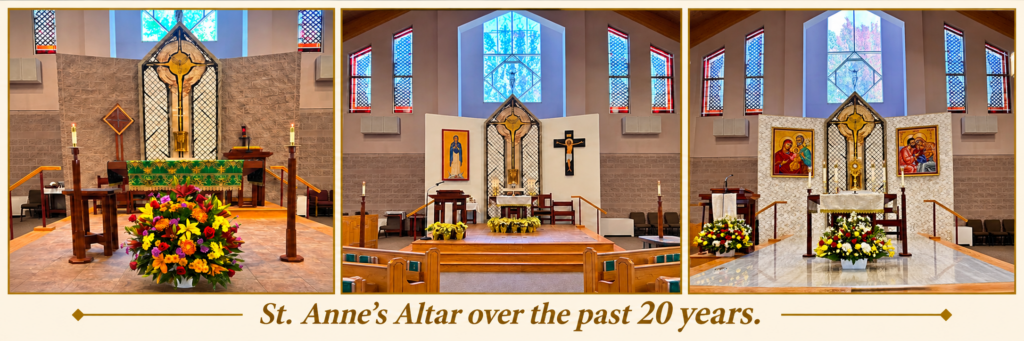
At the center of our church sanctuary stands a beautiful mosaic with a profound spiritual message: God does not reject what is broken. He takes our brokenness and transforms it into something beautiful.
But there is something even more extraordinary about this mosaic. At its center, we discover not simply the image of the Holy Spirit, but the mystery of the Most Holy Trinity: God the Father, God the Son, and God the Holy Spirit.
This makes the mosaic a beautiful expression of our Catholic faith, reminding us that our salvation, healing, and transformation come from the love of the Triune God.
1. The Broken Tiles — A Reflection of Our Humanity
Look carefully at the mosaic. It is made of hundreds of small, irregular, broken pieces of tile.
Each piece has a different shape, size, and color. Some are darker, others lighter. Some are rough, others smooth. Yet, when brought together, they create something beautiful.
These broken pieces represent us — sinners, imperfect human beings, wounded by life, weakened by our mistakes, and sometimes separated from God.
We come to church carrying our brokenness: our sins, disappointments, regrets, fears, failures, and struggles.
Some of us carry the pain of broken relationships. Others struggle with addictions, loneliness, guilt, or the consequences of decisions made many years ago.
Some come with strong faith. Others come with doubts and questions.
But we all come because we need God.
The Church is not a museum for saints. It is a spiritual hospital where sinners encounter the mercy of God.
And here is the beauty of this mosaic:
God does not throw away the broken pieces. He gathers them, reshapes them, and gives them a new purpose.
That is exactly what God desires to do with each one of us.
2. At the Center — The Most Holy Trinity
If you look closely at the central image, you discover something extraordinary.
It is not simply a dove representing the Holy Spirit. The artistic design also brings together representations of Jesus Christ and God the Father.
The three divine Persons are represented together: the Father, the Son, and the Holy Spirit.
This is the central mystery of our Catholic faith.
We believe in one God in three divine Persons, not three gods, but one God: Father, Son, and Holy Spirit.
Each Person is fully God, eternally united in one divine nature.
And why is the Trinity placed at the center of these broken pieces?
Because it is God Himself who brings healing, unity, and transformation into our lives.
The Father creates us in love. The Son redeems us through His sacrifice. The Holy Spirit sanctifies us and transforms us from within.
The entire work of our salvation comes from the Holy Trinity.
The Father never stops loving us.
The Son never stops calling us to conversion.
The Holy Spirit never stops working in our hearts.
We may give up on ourselves, but God continues to invite us into His love.
3. God the Father — The One Who Never Abandons His Children
The presence of God the Father reminds us that we belong to Him.
We are not accidents. We are not mistakes. We are His beloved children.
Even when we turn away from Him through sin, His love continues to call us home.
Think about the parable of the Prodigal Son.
The young man made terrible mistakes. He wasted his inheritance, damaged his relationship with his father, and lost his dignity.
But when he returned home, his father did not reject him.
He ran to embrace him.
That is the heart of God the Father.
God sees beyond our brokenness. He sees the dignity of the child He created.
The broken tiles remind us that no matter how damaged our lives may appear, we never lose our dignity as children loved by God.
4. Jesus Christ — The One Who Redeems Our Brokenness
The Cross at the center of the mosaic reminds us of the greatest expression of God’s love: Jesus Christ giving His life for our salvation.
Jesus did not come into the world because humanity was perfect.
He came precisely because we needed redemption.
He welcomed sinners, touched lepers, forgave adulterers, ate with tax collectors, and restored dignity to those rejected by society.
He did not ignore sin, but He never stopped loving the sinner.
Jesus Himself said:
“I did not come to call the righteous but sinners.” (Mark 2:17)
Look at the broken tiles surrounding the Cross.
They remind us that Jesus takes what is wounded by sin and offers us the possibility of a new beginning.
Through His death and Resurrection, our sins can be forgiven, our relationship with God restored, and our lives renewed.
The Cross teaches us that our past does not have to determine our future. God’s mercy can open a new chapter in our lives.
5. The Holy Spirit — The One Who Transforms Us
The dove with outstretched wings represents the Holy Spirit, who continues the work of sanctification in our lives.
The Holy Spirit does not simply come to give us extraordinary spiritual experiences, miracles, or charismatic gifts.
The Holy Spirit comes to transform our hearts.
He teaches us to forgive when forgiveness is difficult.
He gives us courage when we are afraid.
He brings peace when our lives are filled with confusion.
He helps us overcome sin and grow in holiness.
Saint Paul reminds us:
“The fruit of the Spirit is love, joy, peace, patience, kindness, generosity, faithfulness, gentleness, self-control.” (Galatians 5:22–23)
The greatest evidence of the Holy Spirit in our lives is not how loudly we pray, how beautifully we sing, or how many religious activities we attend.
It is how much our lives begin to resemble the life of Jesus Christ.
The Holy Spirit takes our broken pieces and gradually transforms them through God’s grace.
6. The Golden Circle — God’s Eternal Love
Surrounding the Trinity is a beautiful golden circular design.
In Christian sacred art, the circle can symbolize eternity, divine perfection, and the everlasting presence of God.
It has no beginning and no end.
It reminds us that God’s love is eternal.
The golden colors suggest heavenly glory, divine light, and holiness.
Notice how the many broken pieces are gathered around the center.
They seem to find their unity in the Trinity.
And that teaches us something essential:
When God becomes the center of our lives, even our broken experiences can become part of something meaningful and beautiful.
God does not necessarily erase our history. Through His grace, He can redeem it.
Our wounds can teach us compassion.
Our failures can teach us humility.
Our suffering can help us understand the suffering of others.
And our experience of forgiveness can make us more merciful toward those who need forgiveness.
7. Different Pieces, One Beautiful Church
There is another important message in this mosaic.
Not one of the broken tiles is exactly like another.
Some are large. Others are small.
Some are light. Others are dark.
Some are smooth. Others have rough edges.
Yet every piece contributes to the beauty of the whole.
Isn’t that a beautiful image of the Catholic Church?
We come from different countries, cultures, languages, backgrounds, and experiences.
We have different personalities, gifts, weaknesses, and struggles.
Some have been faithful Catholics all their lives. Others are returning after many years away from the Church.
Some are saints in the making. Others are just beginning their journey of conversion.
But all of us are invited to belong to the Body of Christ.
Saint Paul tells us:
“Now you are the body of Christ, and individually members of it.” (1 Corinthians 12:27)
The Church is not beautiful because every member is perfect. The Church is beautiful because God’s grace is working among imperfect people.
Imagine removing every broken tile from this mosaic.
Nothing would remain of the beautiful image.
In the same way, we should never treat people as disposable simply because they have sinned, failed, or made mistakes.
We must never forget that every human being has dignity and is loved by God.
Our mission as Christians is not to push broken people away from God.
Our mission is to help them encounter the One who can heal them.
8. The Altar Before the Mosaic — Where Transformation Continues
There is one more beautiful detail.
The mosaic stands behind the altar, where we celebrate the Holy Eucharist.
This connection is especially meaningful.
Every time we gather for Mass, we come before the Holy Trinity as imperfect people in need of grace.
We acknowledge our sins.
We listen to the Word of God.
We bring our prayers, sacrifices, joys, and sufferings to the altar.
And in the Eucharist, through the action of the Holy Spirit, bread and wine become the Body and Blood of Jesus Christ.
We receive not merely a symbol of God’s love, but Christ Himself, truly present.
The same God who gathers the broken pieces of this mosaic desires to gather the broken pieces of our lives and transform us through His grace.
We come to Mass not because we are perfect, but because we need to be nourished, strengthened, forgiven, and renewed.
The Eucharist is not a reward for people who believe they have no need of conversion. It is the gift of Christ to His Church, received with faith and the proper spiritual disposition.
And every time we leave the church, we are called to become what we have received: the living presence of Christ’s love in the world.
9. A Message for Everyone Who Enters This Church
The next time you enter this church and look at this mosaic, remember:
You may be broken, but you are not worthless.
You may have sinned, but you are not beyond God’s mercy.
You may have fallen, but God can help you rise again.
You may carry wounds from your past, but the Holy Spirit can bring healing.
You may feel rejected by others, but the Father continues to call you His beloved child.
You may believe your life is too damaged to be restored, but Jesus Christ came precisely to bring redemption and new life.
And even when you cannot see anything beautiful in yourself, God sees what you can become through His grace.
The broken tiles are not discarded. They are gathered together and transformed into something beautiful.
That is the message of this mosaic.
That is the message of the Gospel.
And that is the mission of the Church.
We are not here to condemn people because they are broken.
We are here to proclaim that through Jesus Christ, in the love of the Father and by the power of the Holy Spirit, broken lives can be restored.
A Final Reflection
Perhaps the most beautiful lesson of this mosaic is that the Holy Trinity is not placed outside the broken pieces, far away from human suffering.
The Trinity is at the very center.
God is not distant from our struggles.
He enters our history, accompanies us in our suffering, and invites us into a life of holiness.
The Father loves us.
The Son redeems us.
The Holy Spirit transforms us.
And together, the three divine Persons reveal the one eternal love of God.
So when you look at this mosaic, do not simply admire the beauty of the artwork.
Recognize your own story in those broken pieces.
Recognize the Church, made up of imperfect people walking together toward holiness.
And above all, recognize the Holy Trinity, the source of all healing, forgiveness, unity, and love.
Remember: The beauty of this mosaic does not come from the perfection of its individual pieces. It comes from the way those broken pieces have been brought together around the Holy Trinity.
In God’s hands, even the broken pieces of our lives can become a masterpiece of His love.
Come, Holy Spirit, fill our hearts with your presence. Heavenly Father, embrace us in your mercy. Lord Jesus, heal our wounds and forgive our sins. Most Holy Trinity, take the broken pieces of our lives and transform us into a beautiful reflection of your eternal love. Amen.